-
Exhibitions
- Duration |
Ranjana Thapalyal
- — Ranjana Thapalyal
-
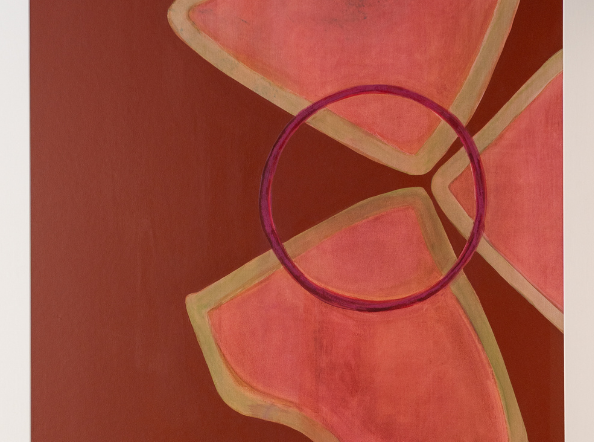
![A color of rose, 2025]() A color of rose, 2025
A color of rose, 2025
-
![Fall Moon, 1984]() Fall Moon, 1984
Fall Moon, 1984
-
![Rain Catcher, 1984]() Rain Catcher, 1984
Rain Catcher, 1984
-
![flying fossil, 1986]() flying fossil, 1986
flying fossil, 1986
-
![Flight, 1987]() Flight, 1987
Flight, 1987
-
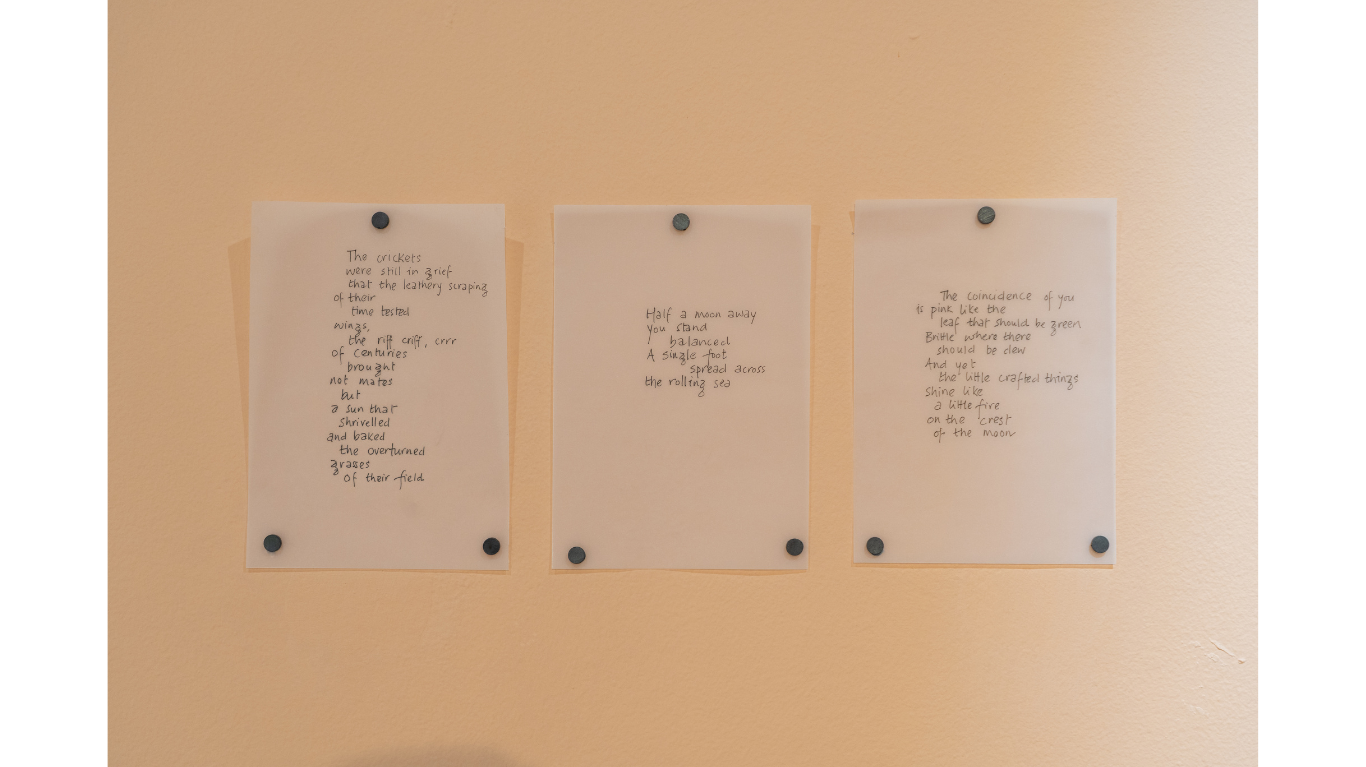
![Jadelight Triptych part 3, 2025]() Jadelight Triptych part 3, 2025
Jadelight Triptych part 3, 2025
-
![Jadelight Triptych part 2, 2025]() Jadelight Triptych part 2, 2025
Jadelight Triptych part 2, 2025
-
![Vertical Landscape, 1987]() Vertical Landscape, 1987
Vertical Landscape, 1987
-
![Beam, 2019]() Beam, 2019
Beam, 2019
-
![Jadelight Triptych part 1, 2025]() Jadelight Triptych part 1, 2025
Jadelight Triptych part 1, 2025
-
![Images Of Autumn, 1987]() Images Of Autumn, 1987
Images Of Autumn, 1987
-
![Ladder, 1987]() Ladder, 1987
Ladder, 1987
-
![Glimpse, 2019]() Glimpse, 2019
Glimpse, 2019
-
![Blue moon, 2019]() Blue moon, 2019
Blue moon, 2019
-
![Green Rain, 2020]() Green Rain, 2020
Green Rain, 2020
-
![Fern, 2019]() Fern, 2019
Fern, 2019
-
![Spring, 2020]() Spring, 2020
Spring, 2020
-
![Cycles of the grassbird, 2024]() Cycles of the grassbird, 2024
Cycles of the grassbird, 2024
-
![loop, 1990]() loop, 1990
loop, 1990
-
![Cave, 1989]() Cave, 1989
Cave, 1989
-
![Pool, 1985]() Pool, 1985
Pool, 1985
-
![When The Sun Rose Again, 1986]() When The Sun Rose Again, 1986
When The Sun Rose Again, 1986
-
![Fissure, 1984]() Fissure, 1984
Fissure, 1984
-
![Inside Outside, 1984]() Inside Outside, 1984
Inside Outside, 1984
-
![Birthmark , 1984]() Birthmark , 1984
Birthmark , 1984
-
![Calling card, 1984]() Calling card, 1984
Calling card, 1984
-
![Riddle I, 1984]() Riddle I, 1984
Riddle I, 1984
-
![Maganese Field, 1987- 2025]() Maganese Field, 1987- 2025
Maganese Field, 1987- 2025
-
![Riddle II]() Riddle II
Riddle II
-
![Sun, 1980]() Sun, 1980
Sun, 1980
-
![Black Moon, 1980]() Black Moon, 1980
Black Moon, 1980
-
![This Way II, 1992]() This Way II, 1992
This Way II, 1992
-
![This Way III, 1992]() This Way III, 1992
This Way III, 1992
-
![Before The Rain, 1986]() Before The Rain, 1986
Before The Rain, 1986
-
![Flying fossil II, 1986]() Flying fossil II, 1986
Flying fossil II, 1986
DURATION
Text by Anushka Rajendran
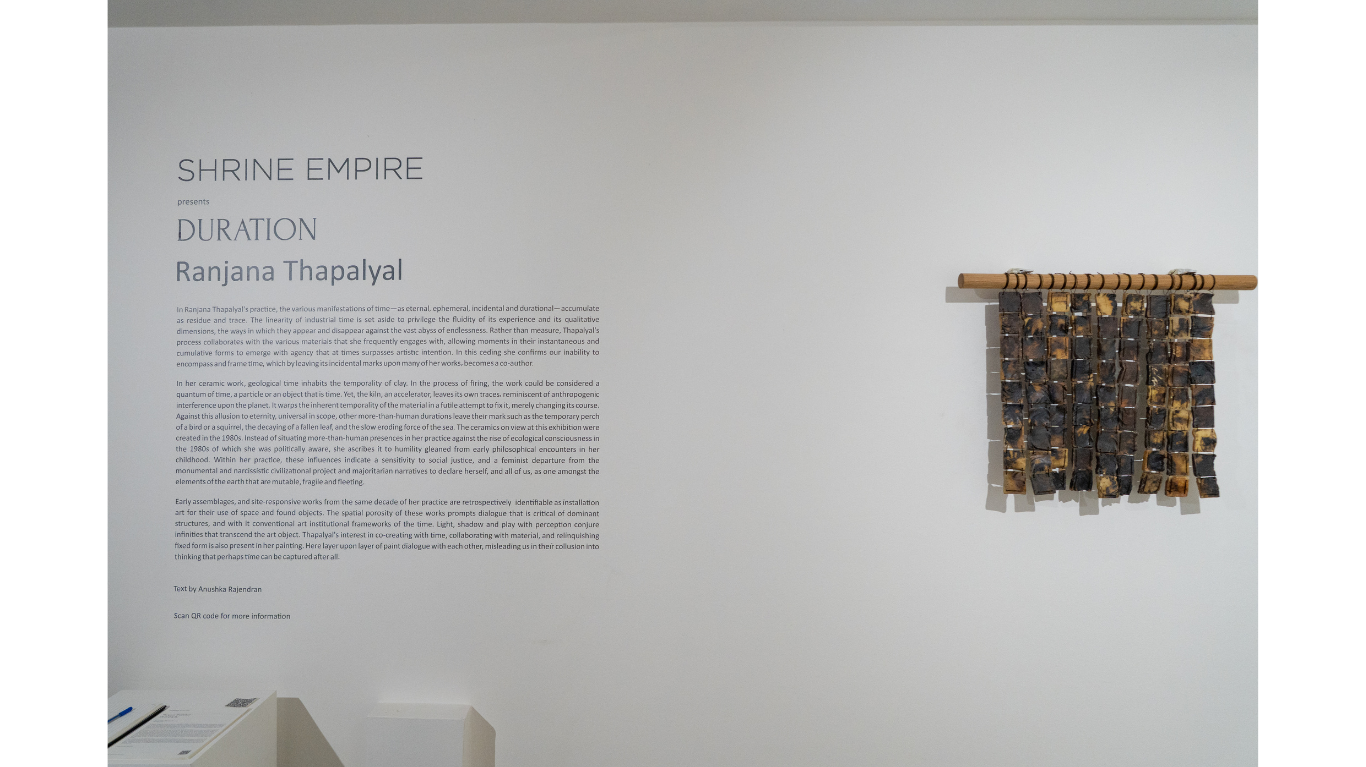
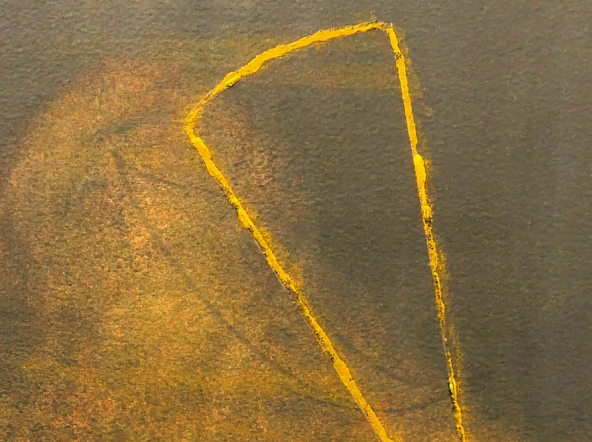
In Ranjana Thapalyal’s practice, the various manifestations of time - as eternal, ephemeral, incidental and durational - accumulate as residue and trace. The linearity of industrial time is set aside to privilege the fluidity of its experience and its qualitative dimensions, the ways in which they appear and disappear against the vast abyss of endlessness. Rather than measure, Thapalyal’s process collaborates with the various materials that she frequently engages with, allowing moments in their instantaneous and cumulative forms to emerge with agency that at times surpasses artistic intention. In this ceding she confirms our inability to encompass and frame time, which by leaving its incidental marks upon many of her works, becomes a co-author.
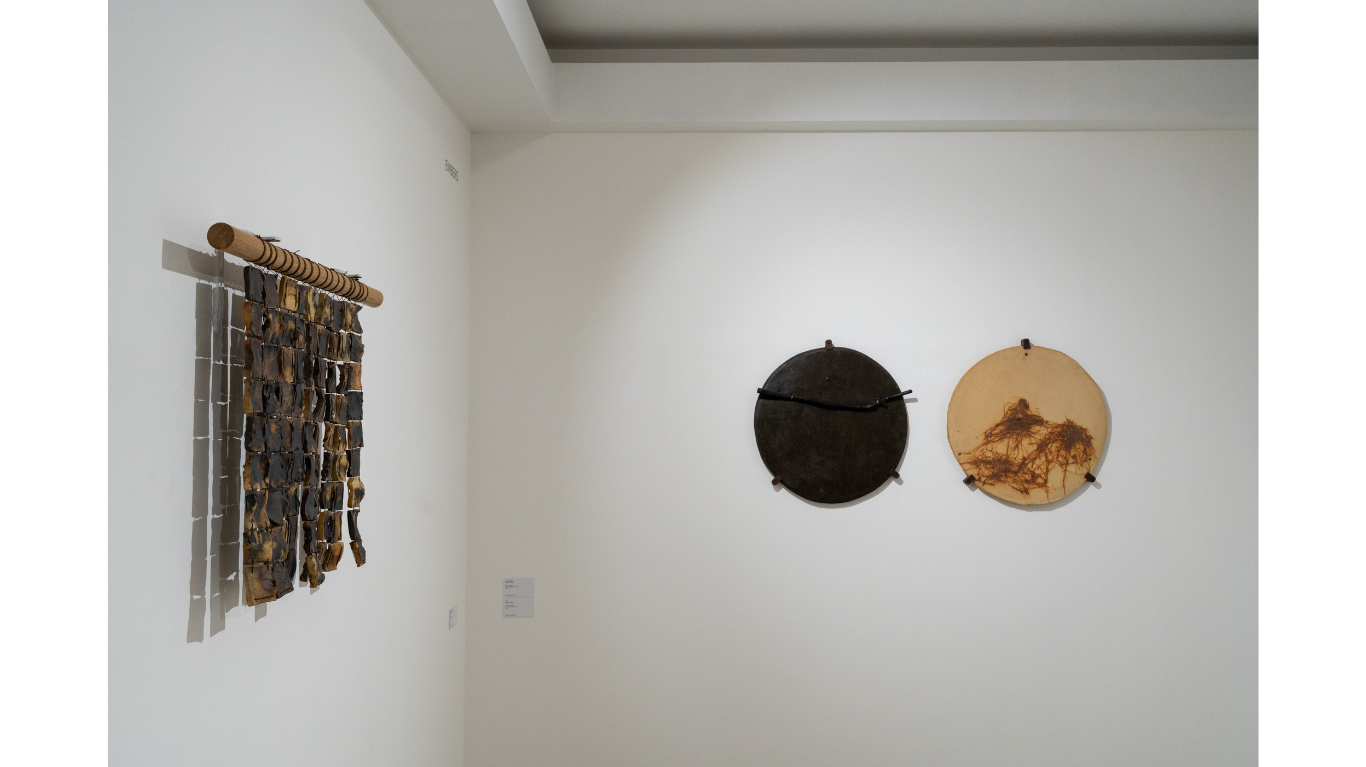
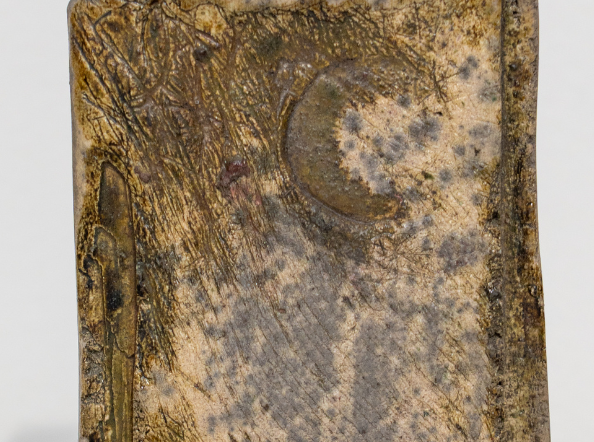
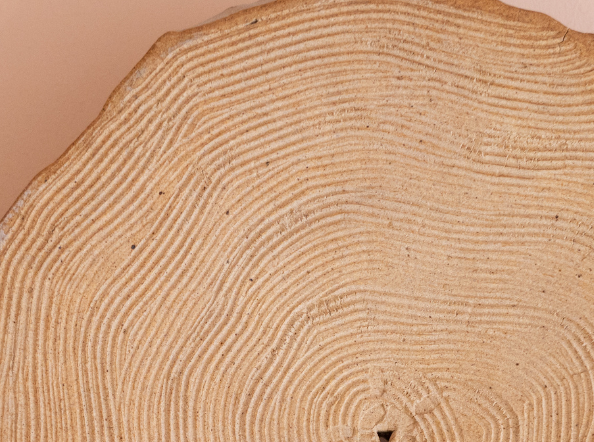
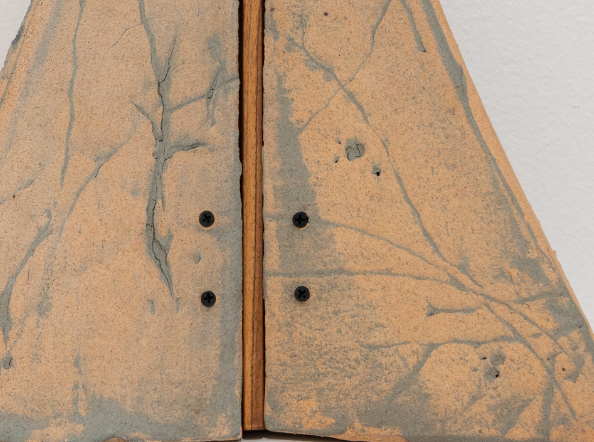
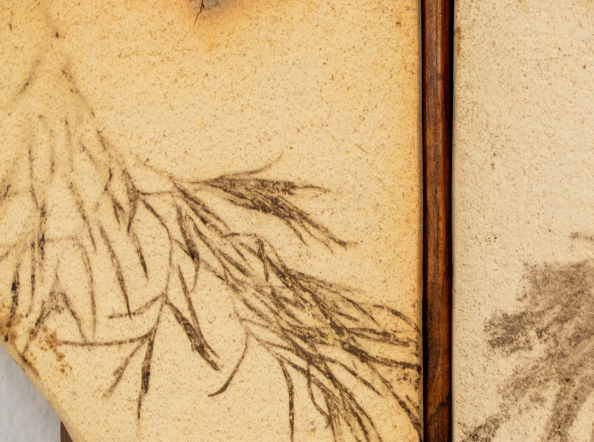
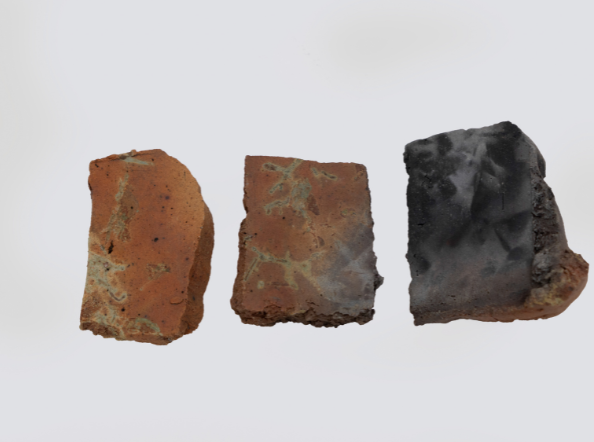
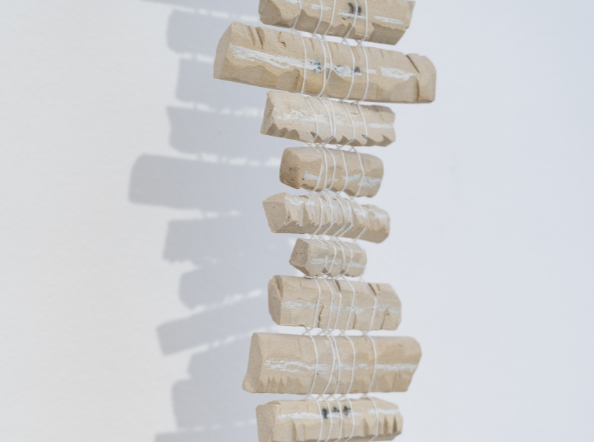
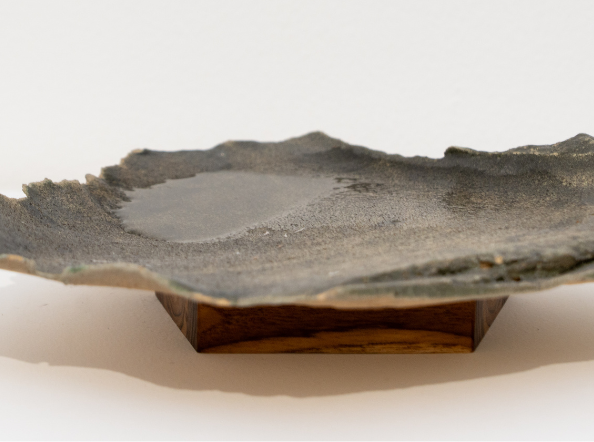
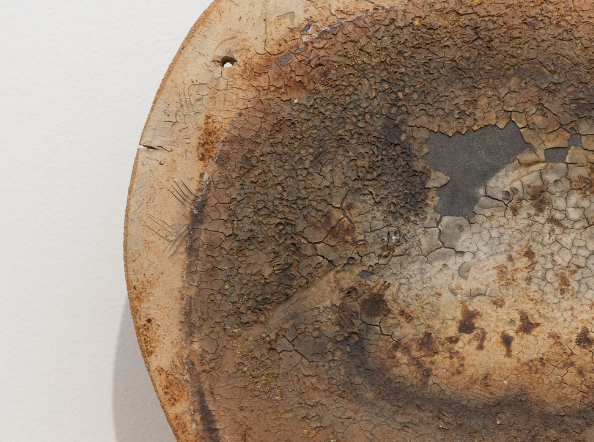
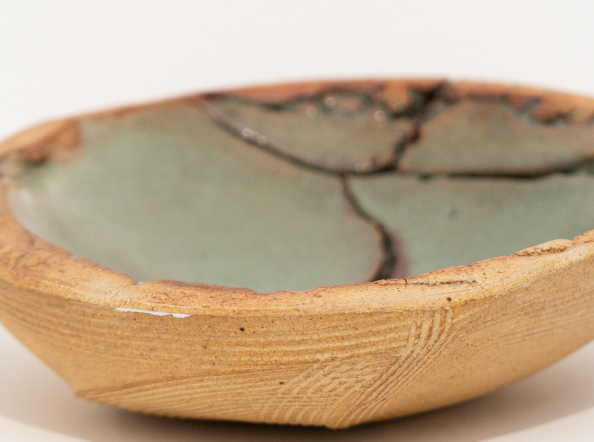
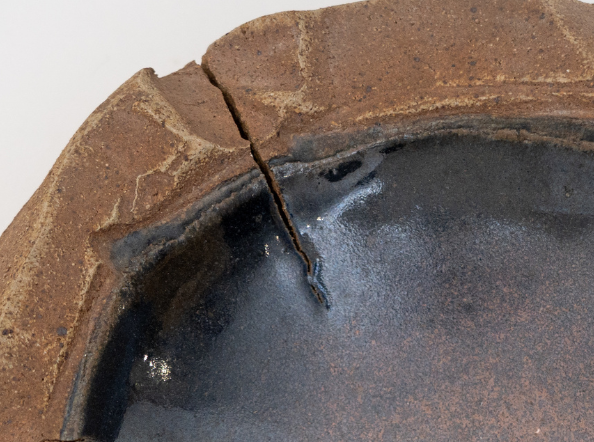
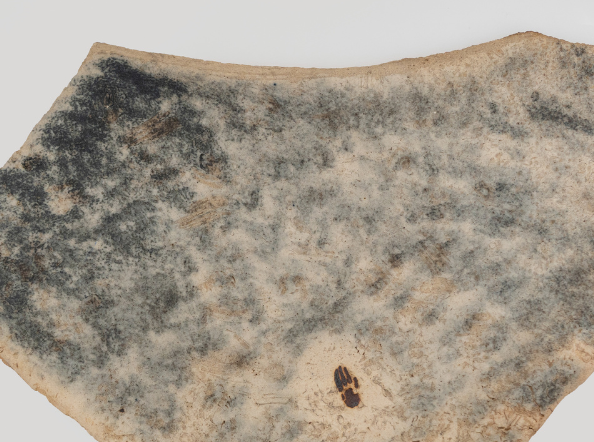
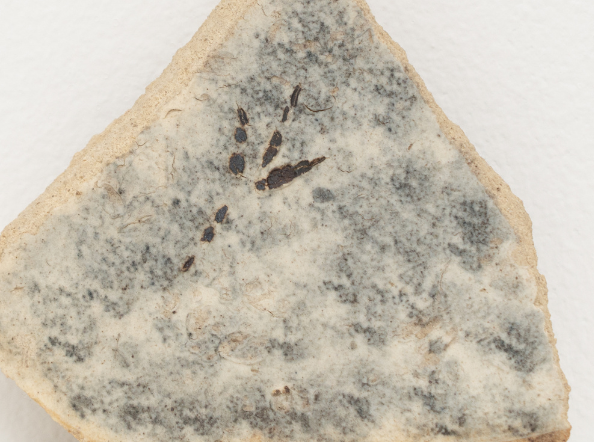
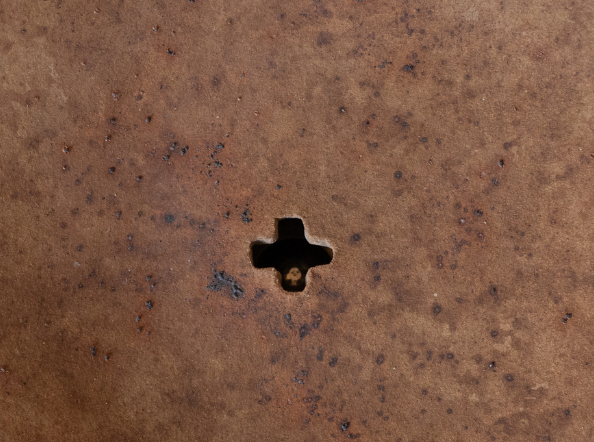
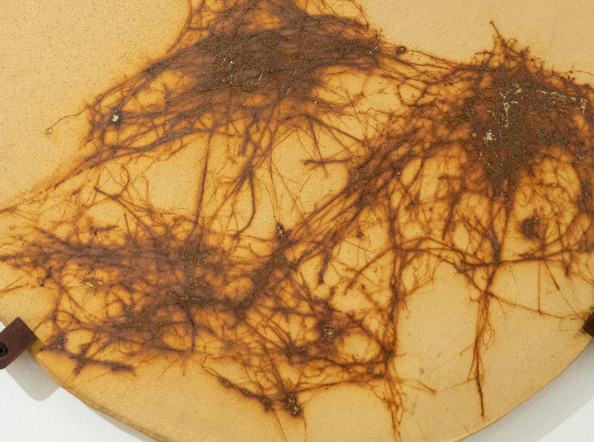
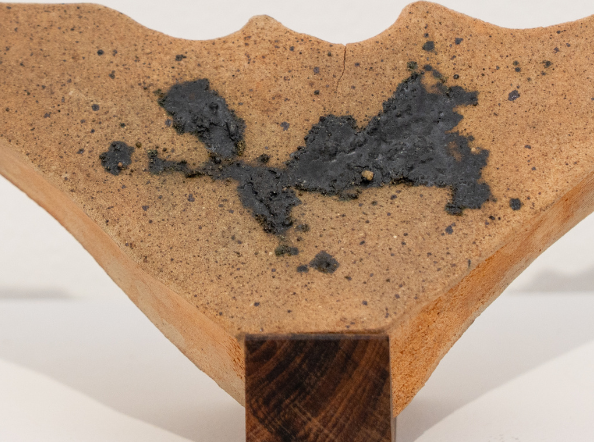
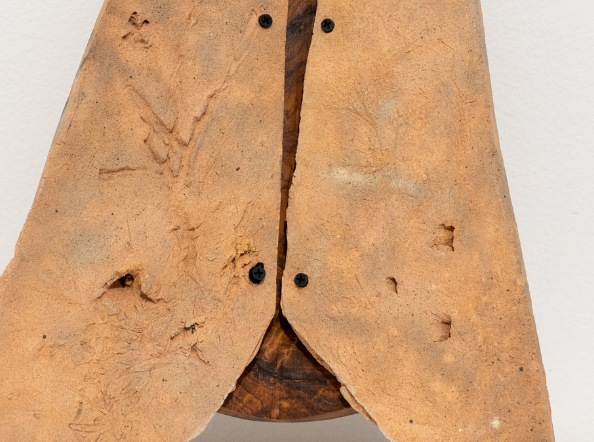
In her ceramic work, geological time inhabits the temporality of clay. In the process of firing, the work could be considered a quantum of time, a particle or an object that is time. Yet, the kiln, an accelerator, leaves its own traces, reminiscent of anthropogenic interference upon the planet. It warps the inherent temporality of the material in a futile attempt to fix it, merely changing its course. Against this allusion to eternity, universal in scope, other more-than-human durations leave their mark such as the temporary perch of a bird or a squirrel, the decaying of a fallen leaf, and the slow eroding force of the sea. The ceramics on view at this exhibition were created in the 1980s. Instead of situating more-than-human presences in her practice against the rise of ecological consciousness in the 1980s of which she was politically aware, she ascribes it to humility gleaned from early philosophical encounters in her childhood. Within her practice, these influences indicate a sensitivity to social justice, and a feminist departure from the monumental and narcissistic civilizational project and majoritarian narratives to declare herself, and all of us, as one amongst the elements of the earth that are mutable, fragile and fleeting.
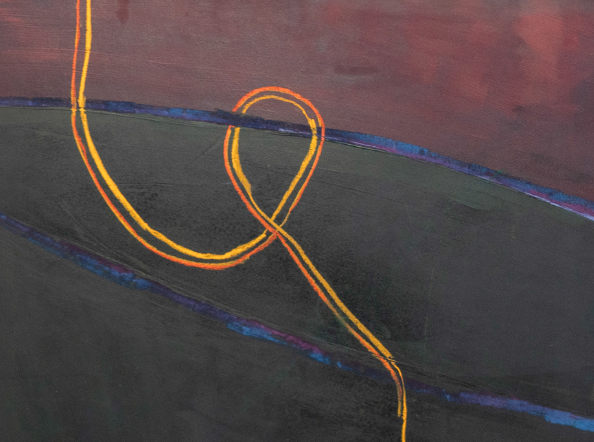
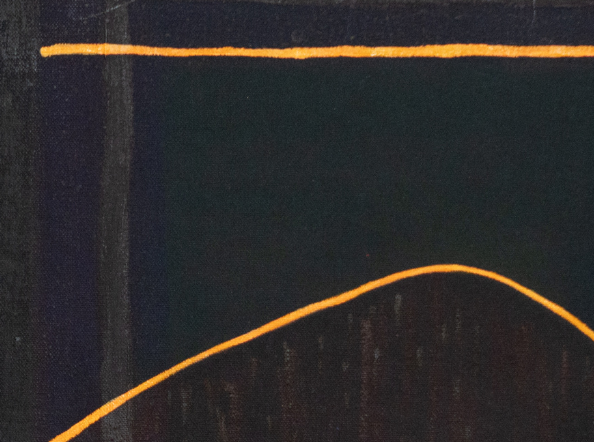
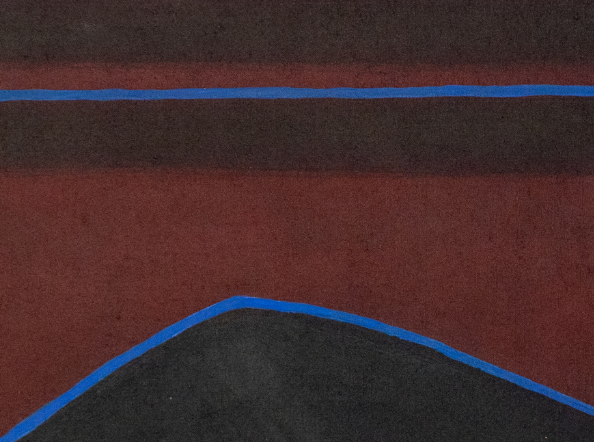
Early assemblages, and site-responsive works from the same decade of her practice are retrospectively identifiable as installation art for their use of space and found objects. The spatial porosity of these works prompts dialogue that is critical of dominant structures, and with it conventional art institutional frameworks of the time. Light, shadow and play with perception conjure infinities that transcend the art object. Thapalyal’s interest in co-creating with time, collaborating with material, and relinquishing fixed form is also present in her painting. Here layer upon layer of paint dialogue with each other, misleading us in their collusion into thinking that perhaps time can be captured after all.
Text by Ranjana Thapalyal
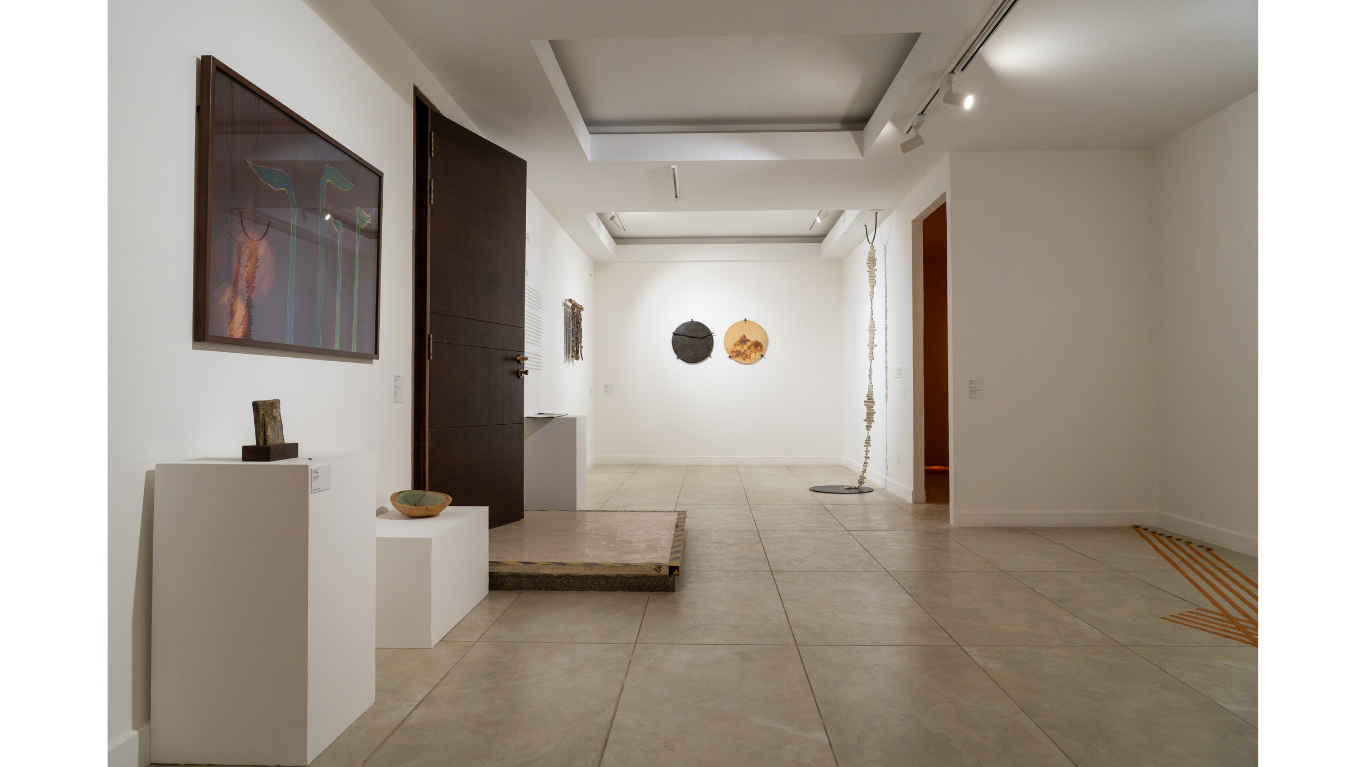
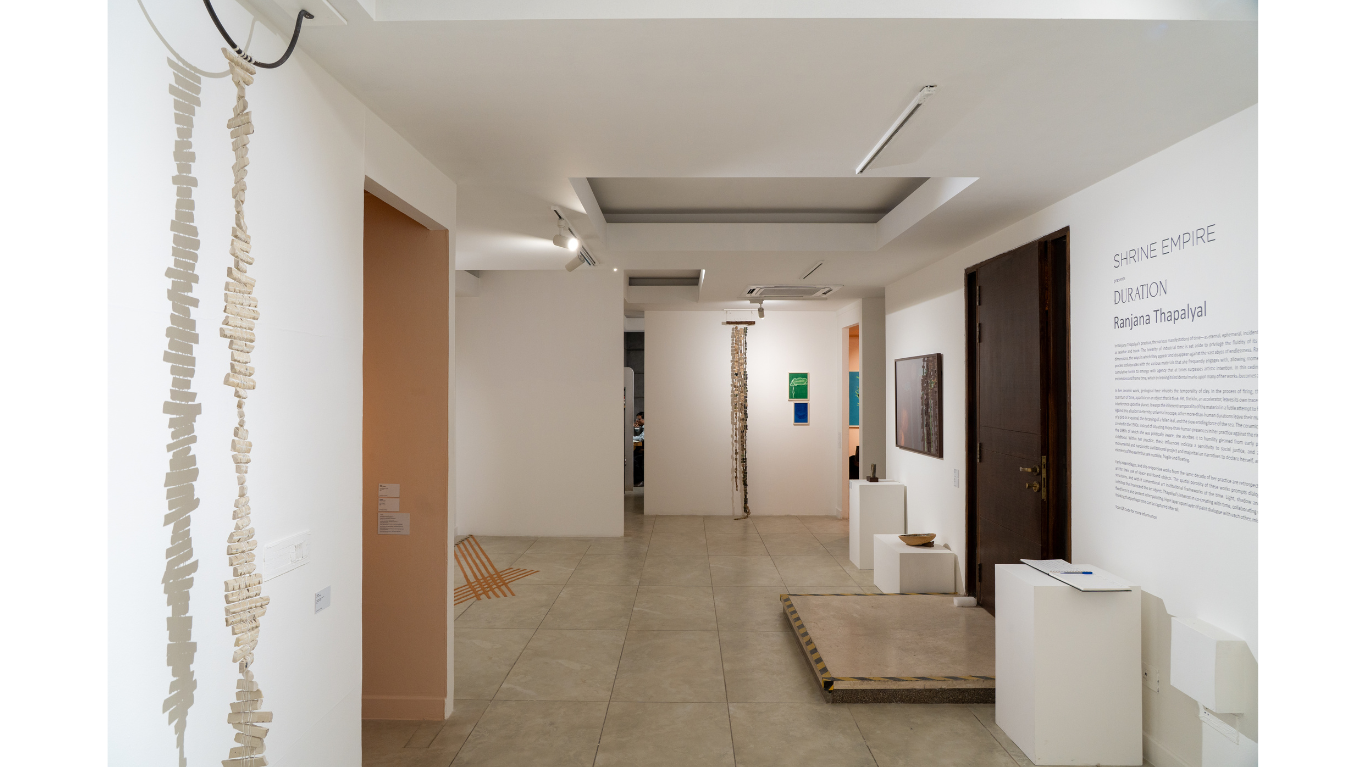
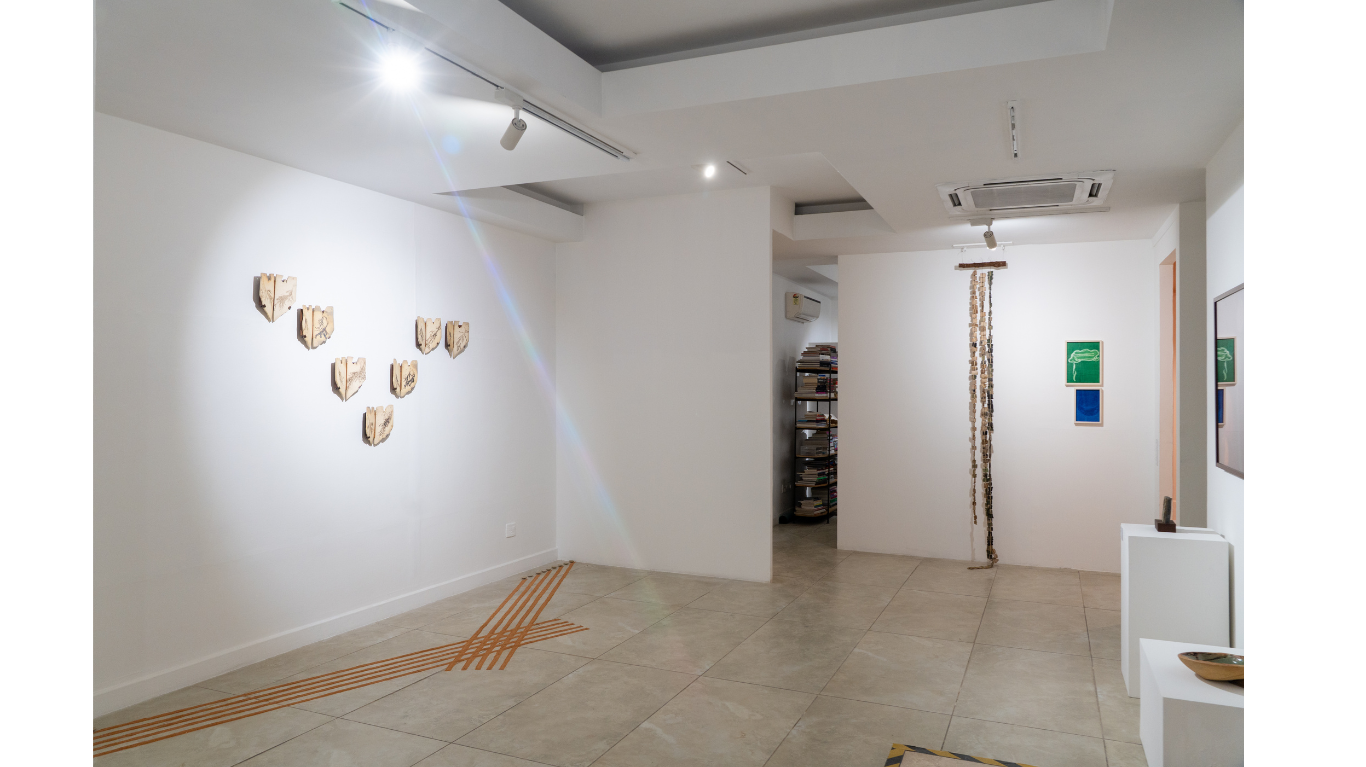
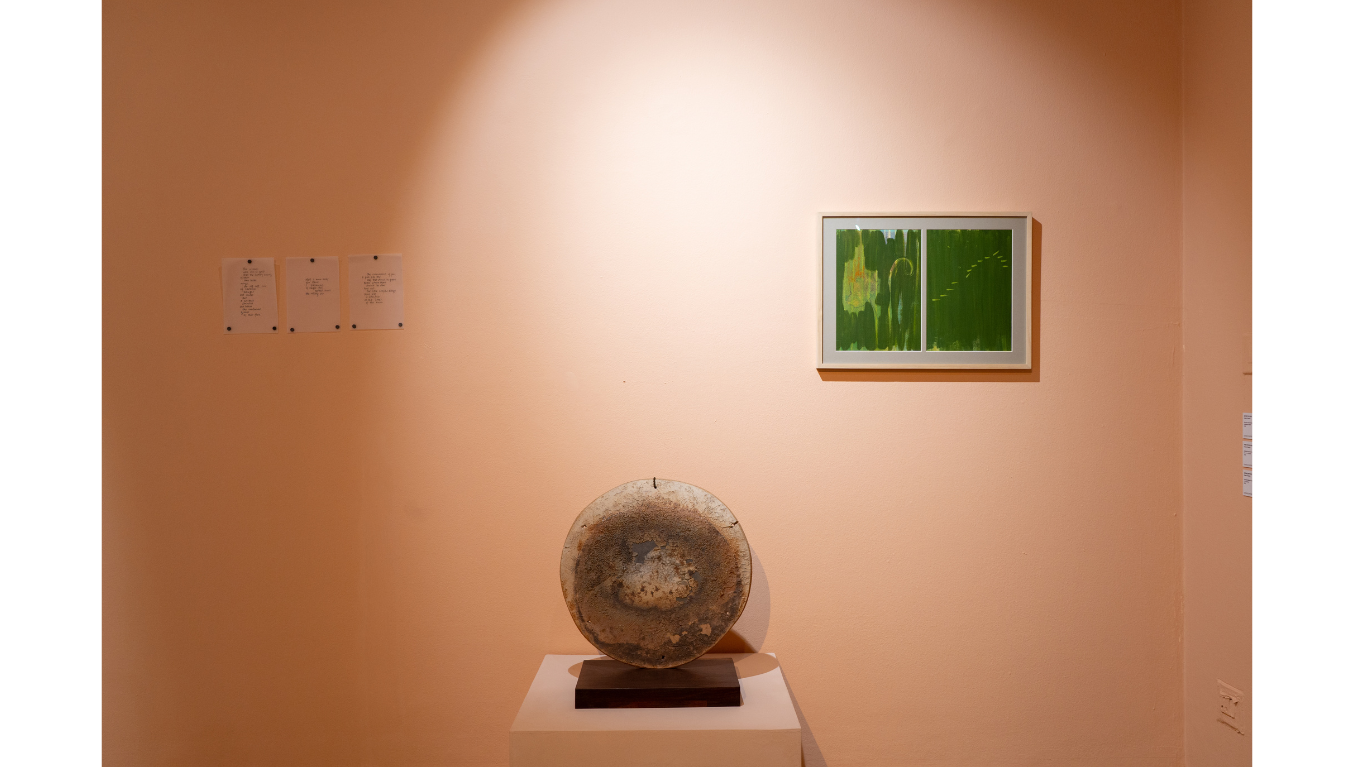
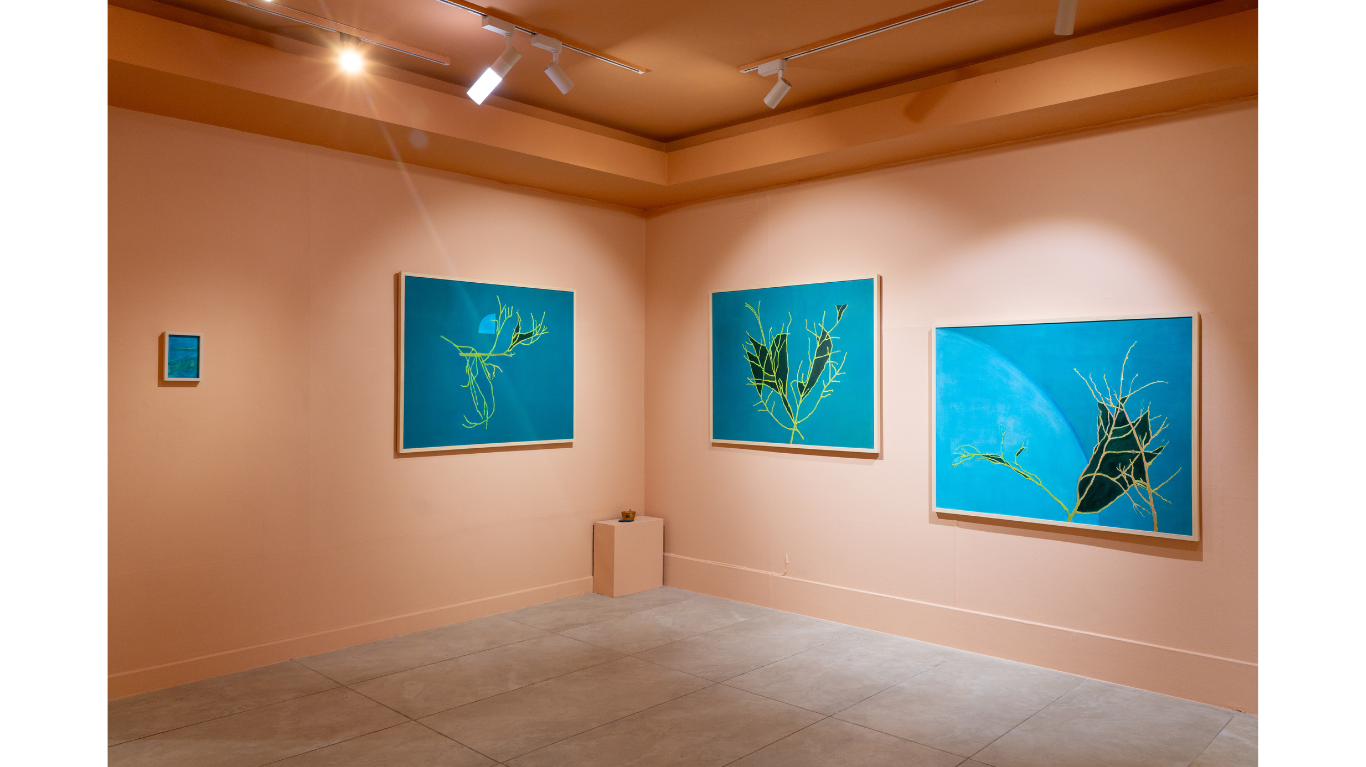
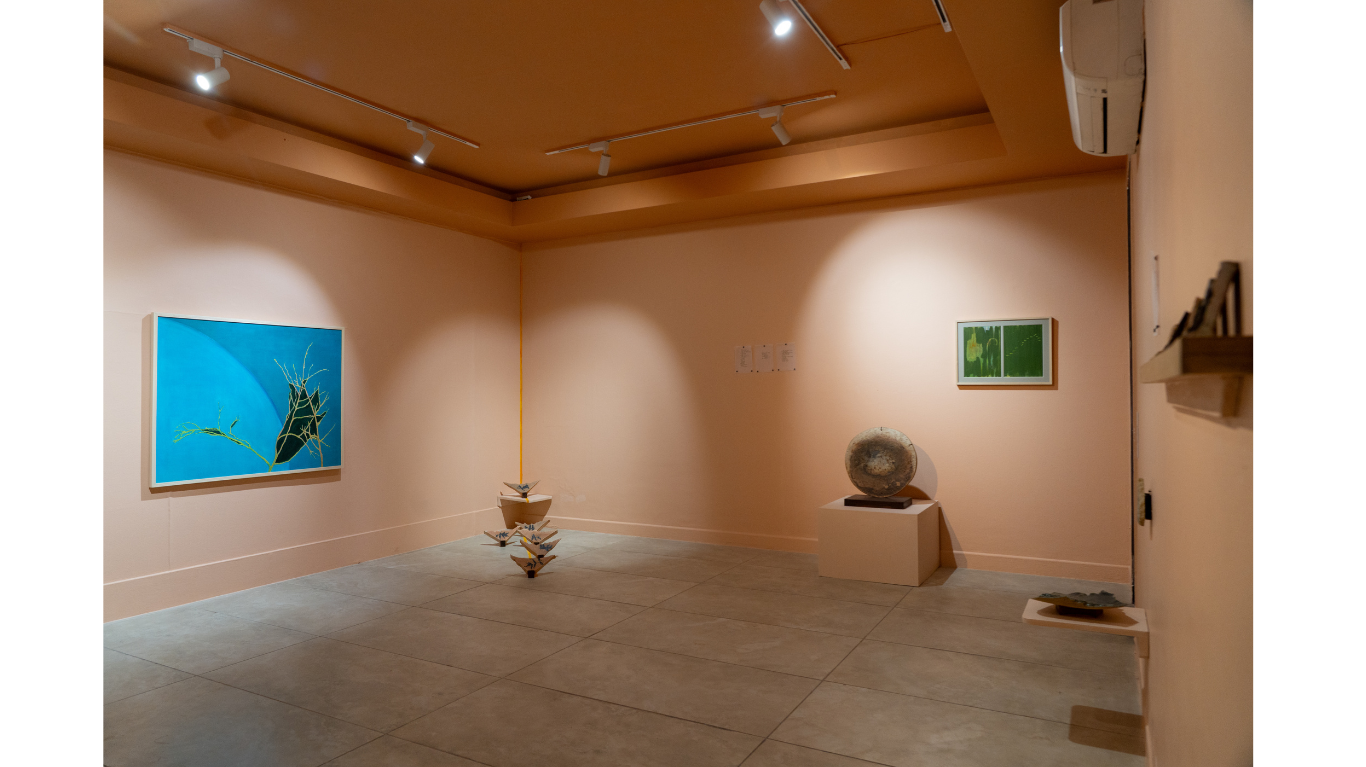
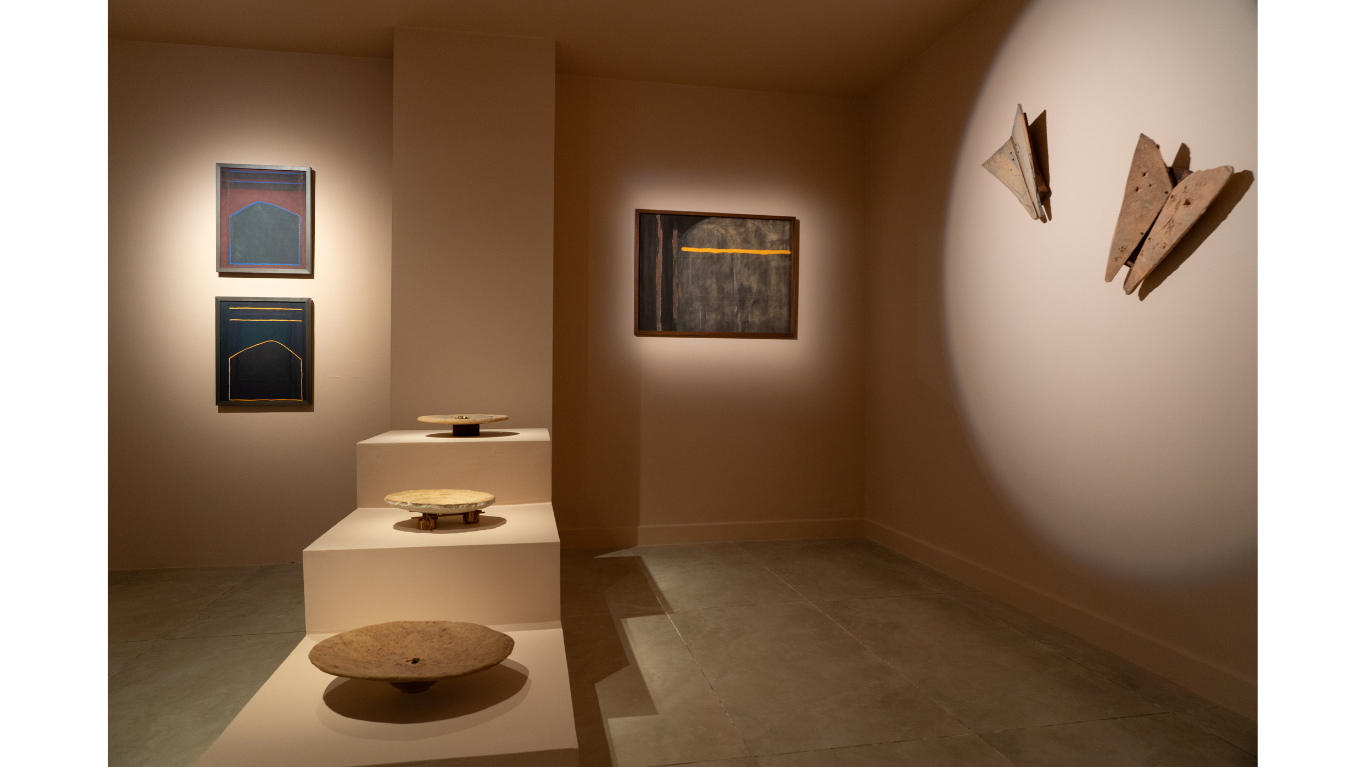
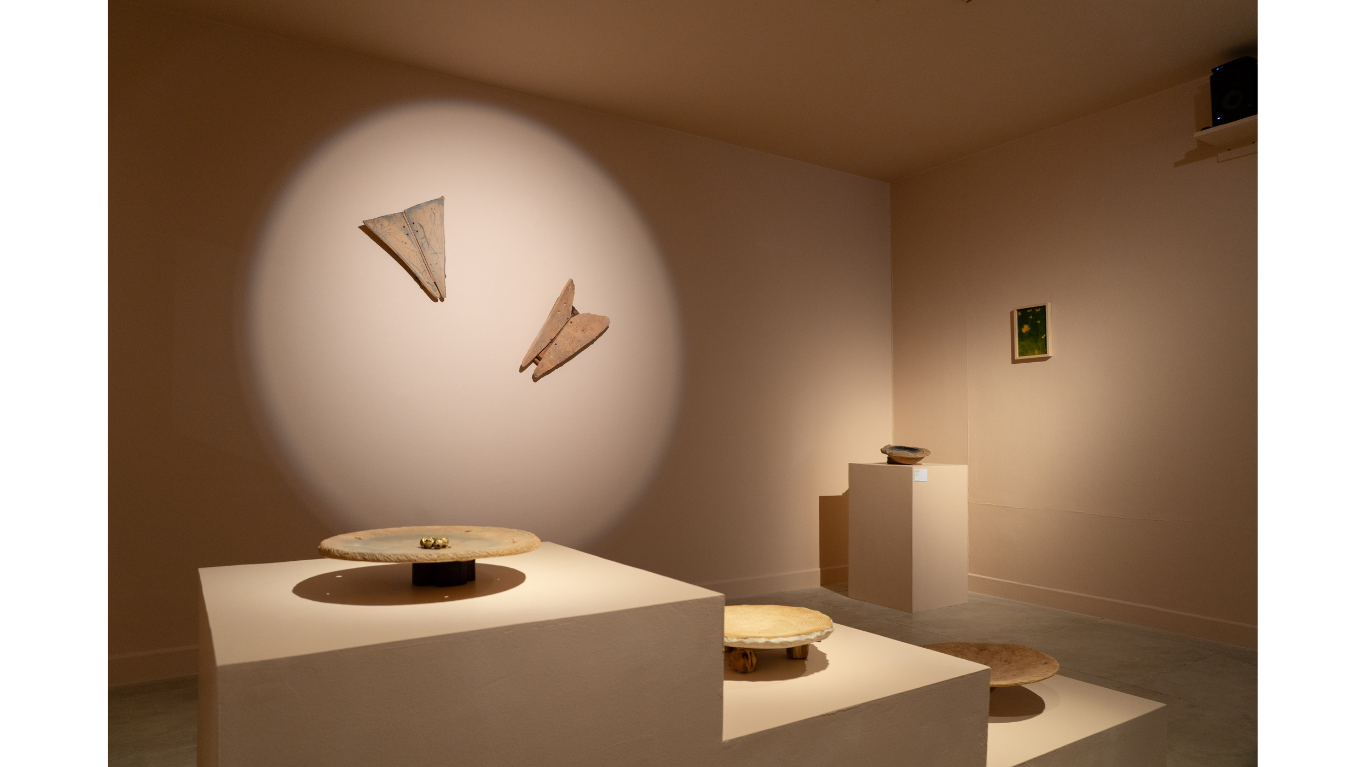
In this exhibition, work produced over several decades is grouped in three spaces, each with their own logic and intent. The ceramics were produced in India and the UK between 1980 and 1987, the paintings and poems between 1989 and 2025. The timespan represented by these dates endows the exhibition with an unspoken autobiographical reflection. There is for me an embedded presence, of the social, cultural and personal encounters that were my reality when each work was made. The challenge- and the joy of this exhibition has been to place these different works in conversation with each other, finding relationships of colour, volume and meaning rather than chronology.
EMBERS
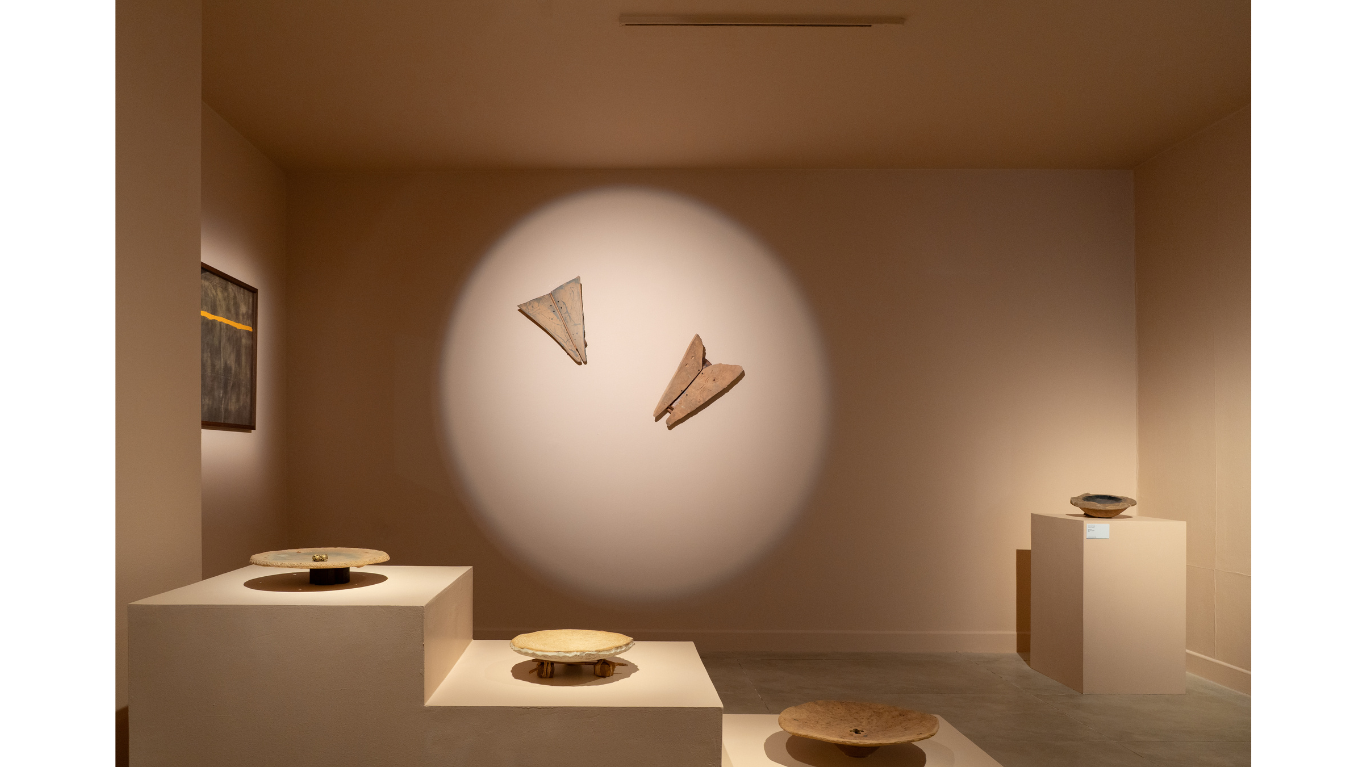
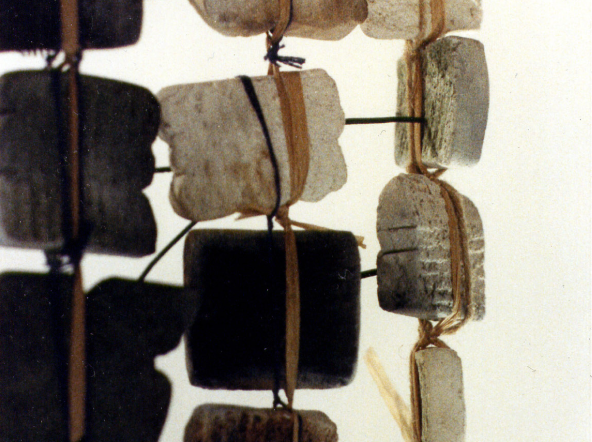
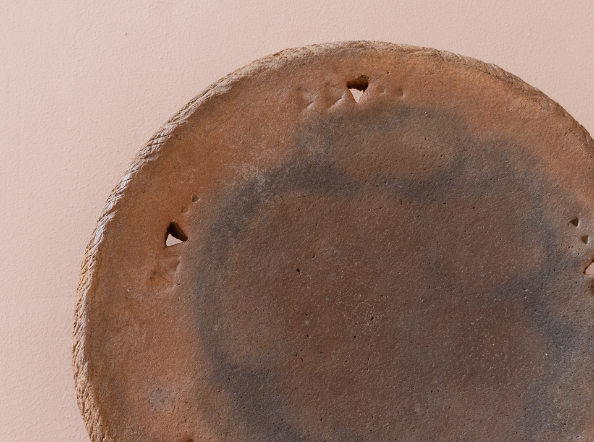
In the hall are mostly ceramic sculptures that have been produced through a variety of building and firing techniques. Apart from ‘Sun’, ‘Black Moon’, and ‘Ladder’ they are made of a stoneware clay body that I produced after much experimentation. It is an open, heavily grogged clay body whose structure and base colour create an ideal platform for capturing the unpredictable effects of reduction and raku firing. Here I recall the assistance in mixing large batches of clay I received from Ramhit, the Garhi Studios ceramics technician of the time. The clay contained local red sand, and eventually the sand itself became a compositional medium in my assemblages and floor works. By the mid-eighties, I was increasingly interested in sculpture as temporary structures, elaborated but ultimately moveable, sitting in harmony within the space they occupy but suggesting larger emotional physical vistas.
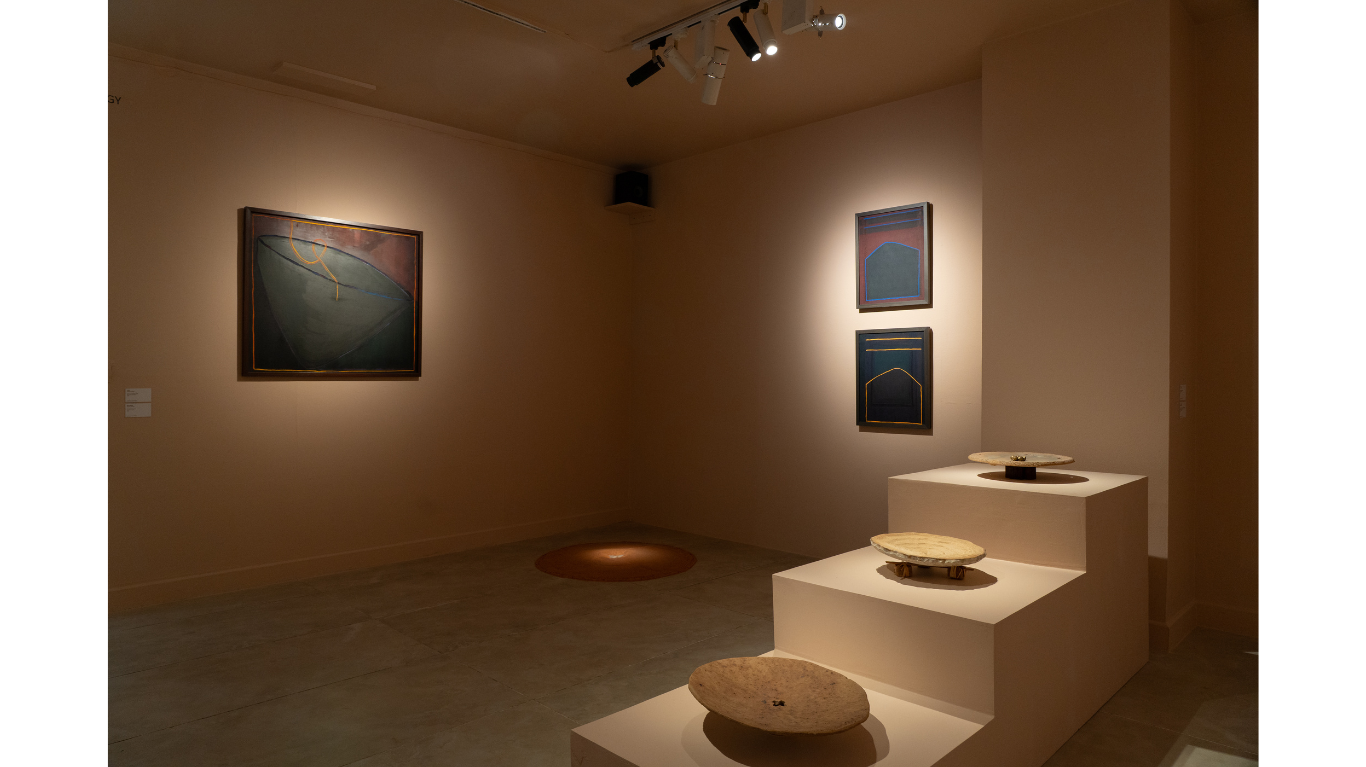
ARCHAEOLOGY
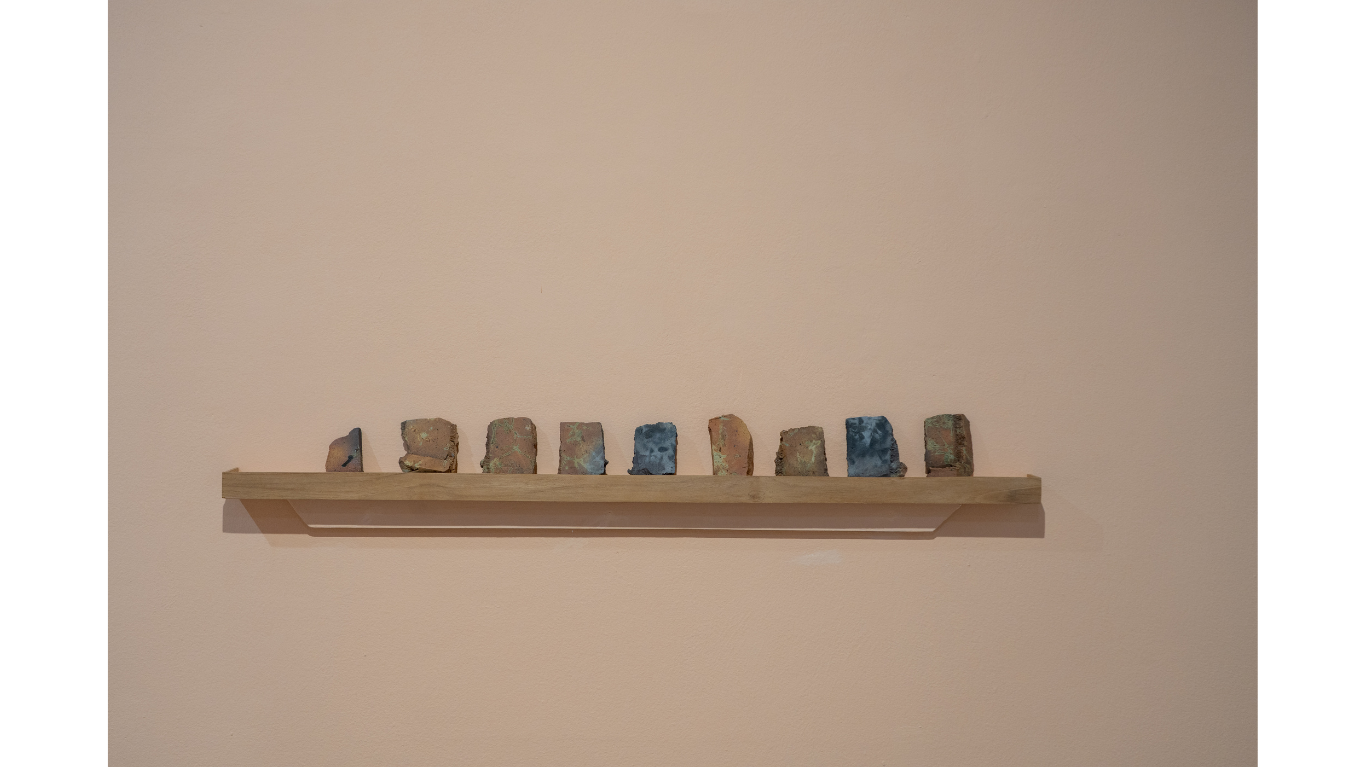
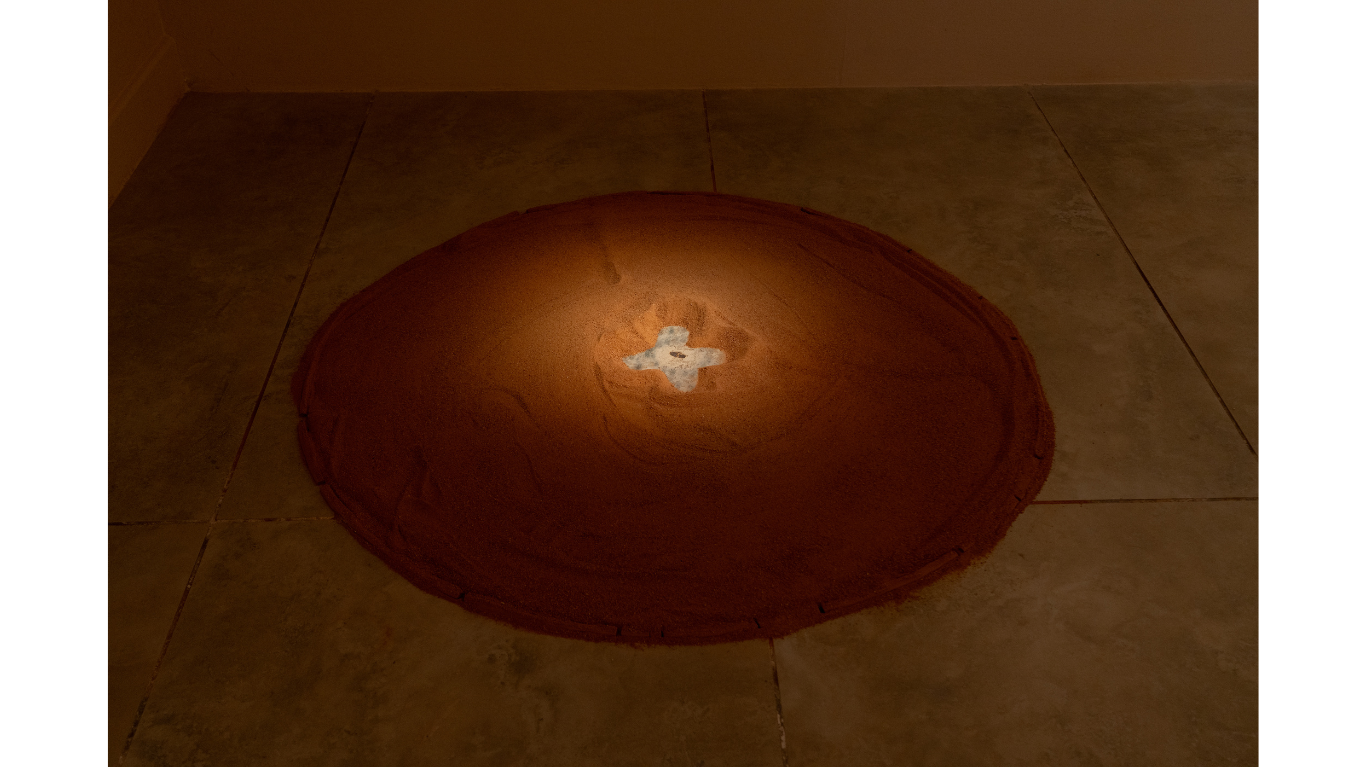
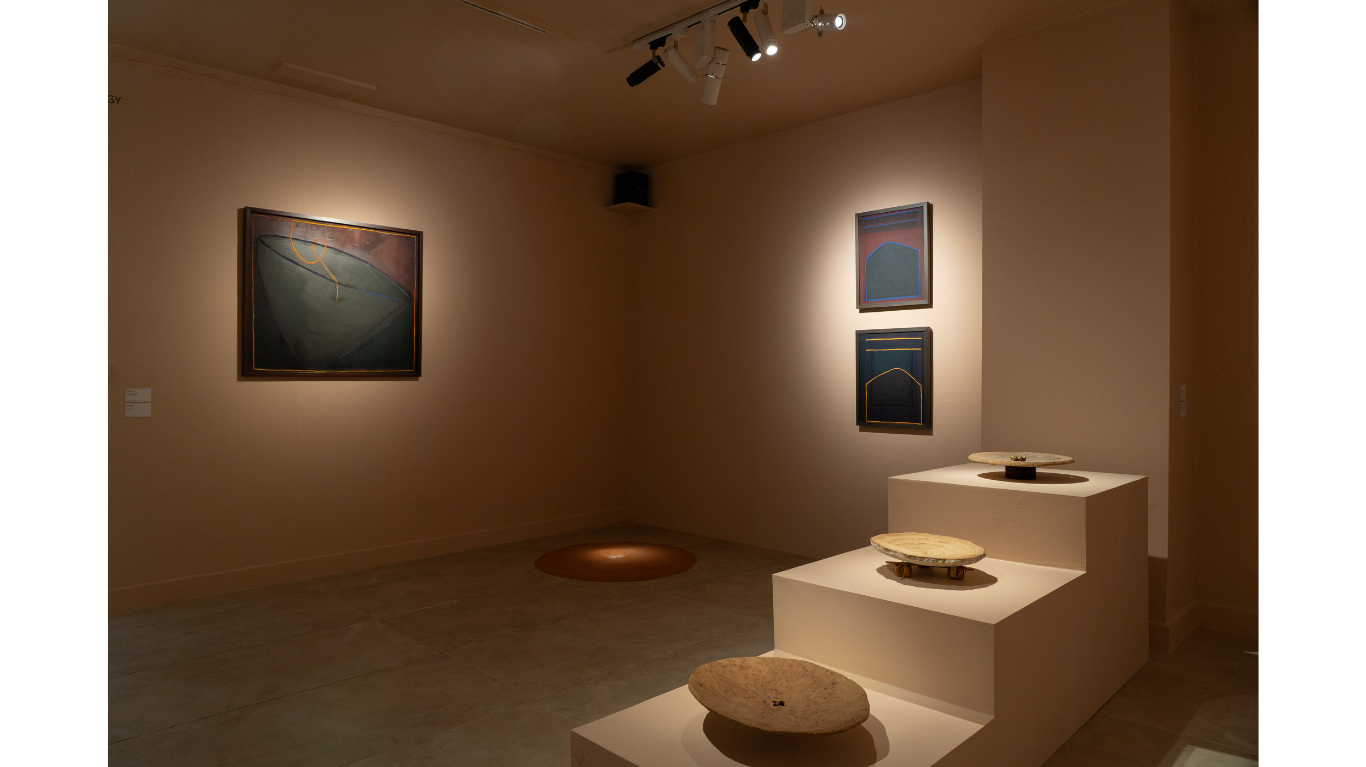
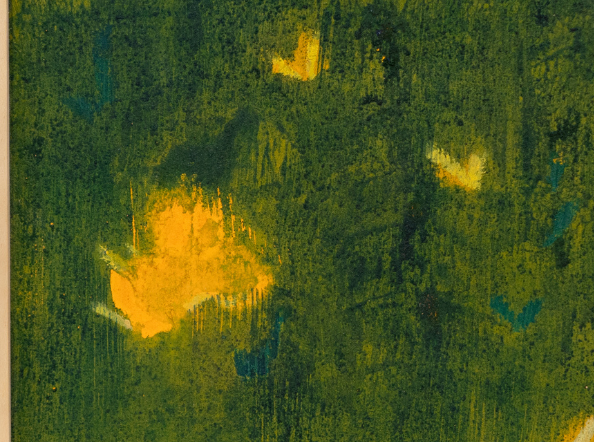
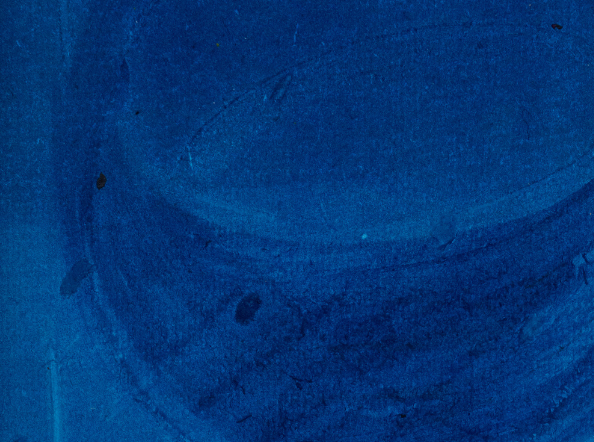
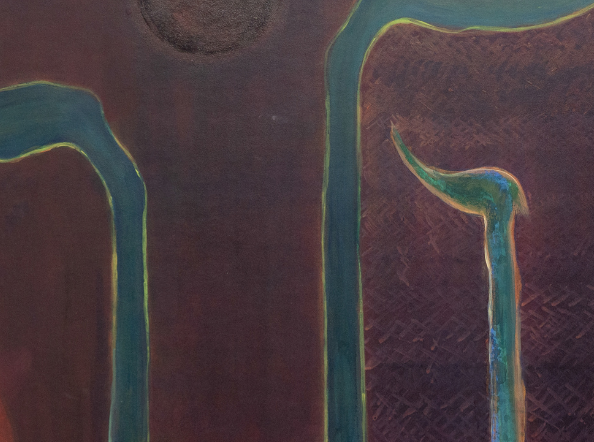
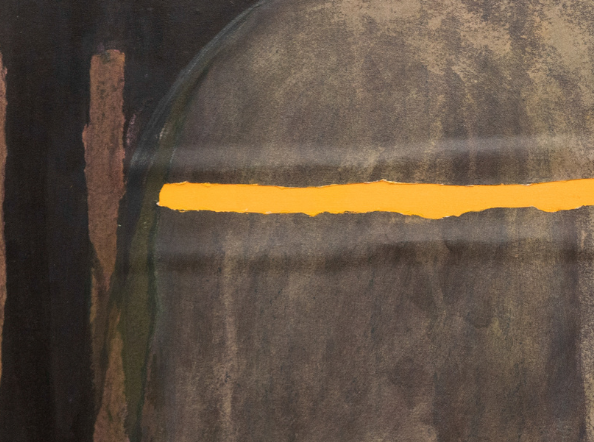
Paintings and ceramics in this room are selected for their affinity with ruins and the cold quiet of spaces that were once bustling. They have given way to time and forgetfulness, but still resonate with stories and imprints of lingering emotions and fleeting steps. This hauntological quietness masks the rhythms of the past, yet enhances the trace of long-gone voices. There are suggestions of history as well as pre-history, and a troubled present. It is echoed in a soundscape by Tin Hut Productions incorporating natural, technical and musical audio. In one corner lies a bed of Badarpur sand, exposing a buried ceramic slab that has captured the paw impression of a long-gone squirrel that slipped on wet clay, and scampered away. In the paintings doorways and arches frame transitional spaces, some dark some drenched in reflective light.
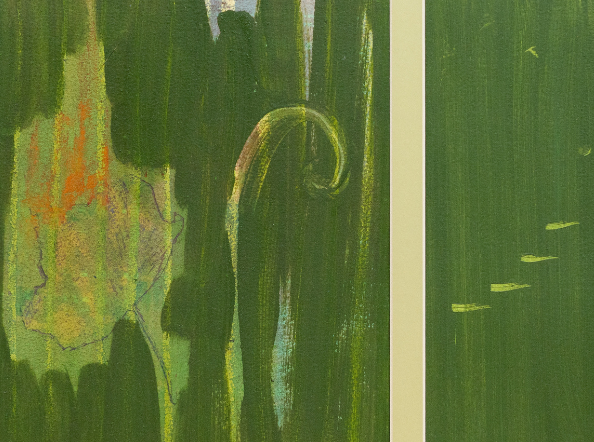
SIGN
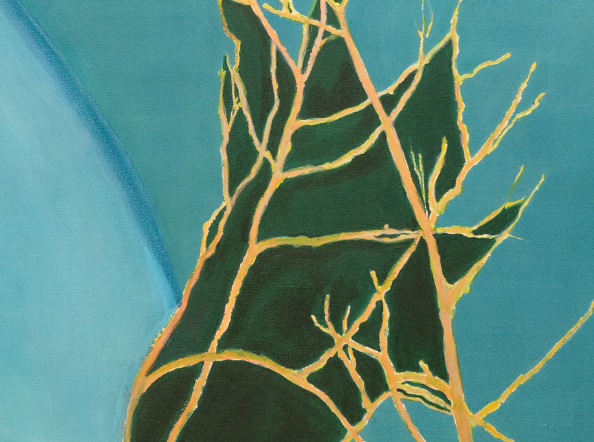
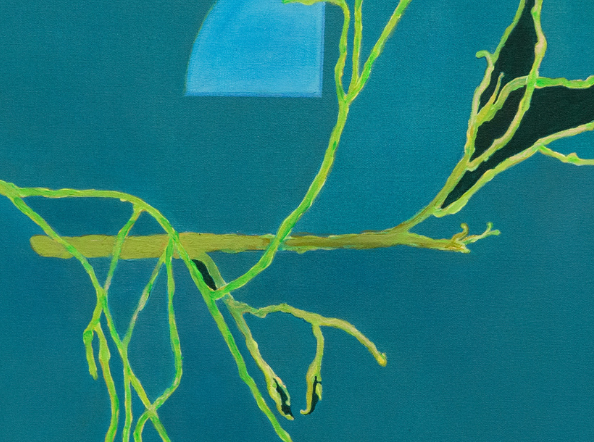
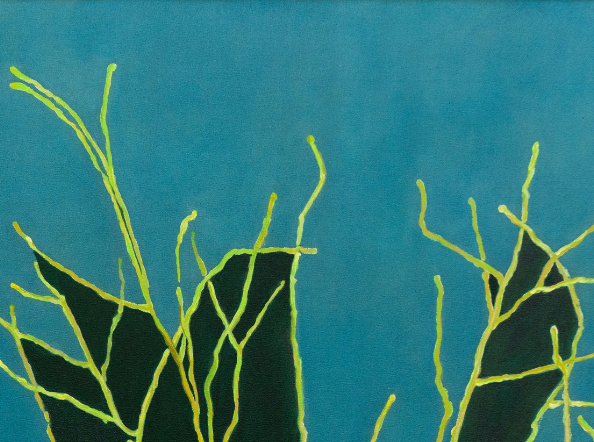
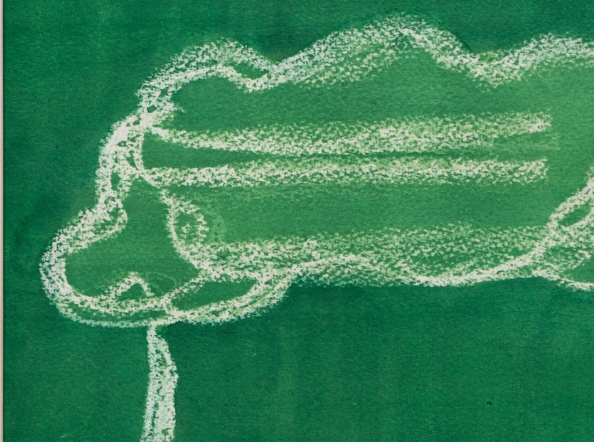
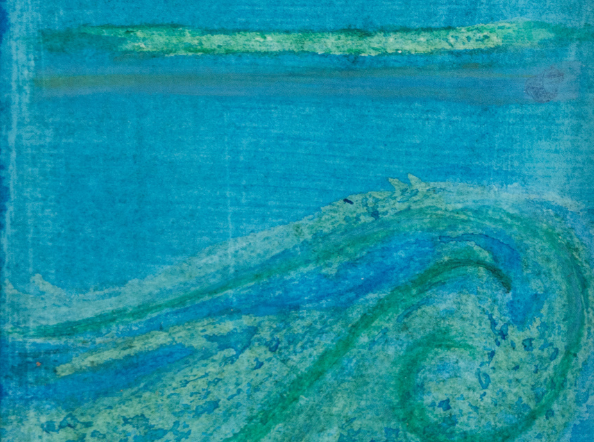
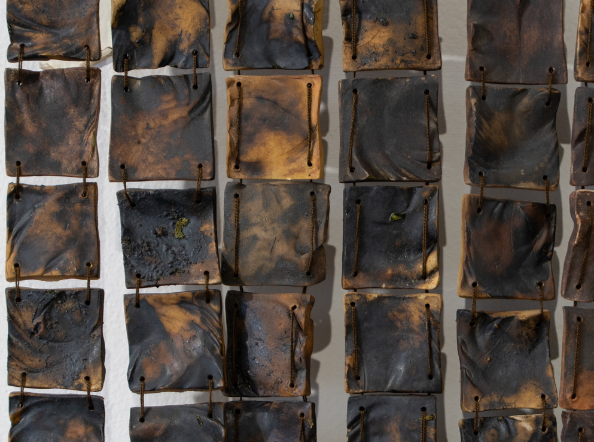
The poems and paintings in this room have emerged from observing and ‘being with’ seemingly insignificant, often minute common place natural phenomena, and setting them adrift in colour and visual language. Some of the texts were written when looking back at a completed painting. Others came first, suggesting form and colour tinged with their meaning. The tones and fused leaf markings on the ceramics in this room also reflect the awareness that close observation induces. In the bright light of a changing climate and a warming sun, these take on a starker meaning, and conjure both scorching loss and the fluidity of hope.